
Buyer guide
How to Choose Commercial Treadmills for Your Gym
A practical buyer’s guide to duty cycle, running area, console design, maintenance and lifecycle value when selecting commercial treadmills.
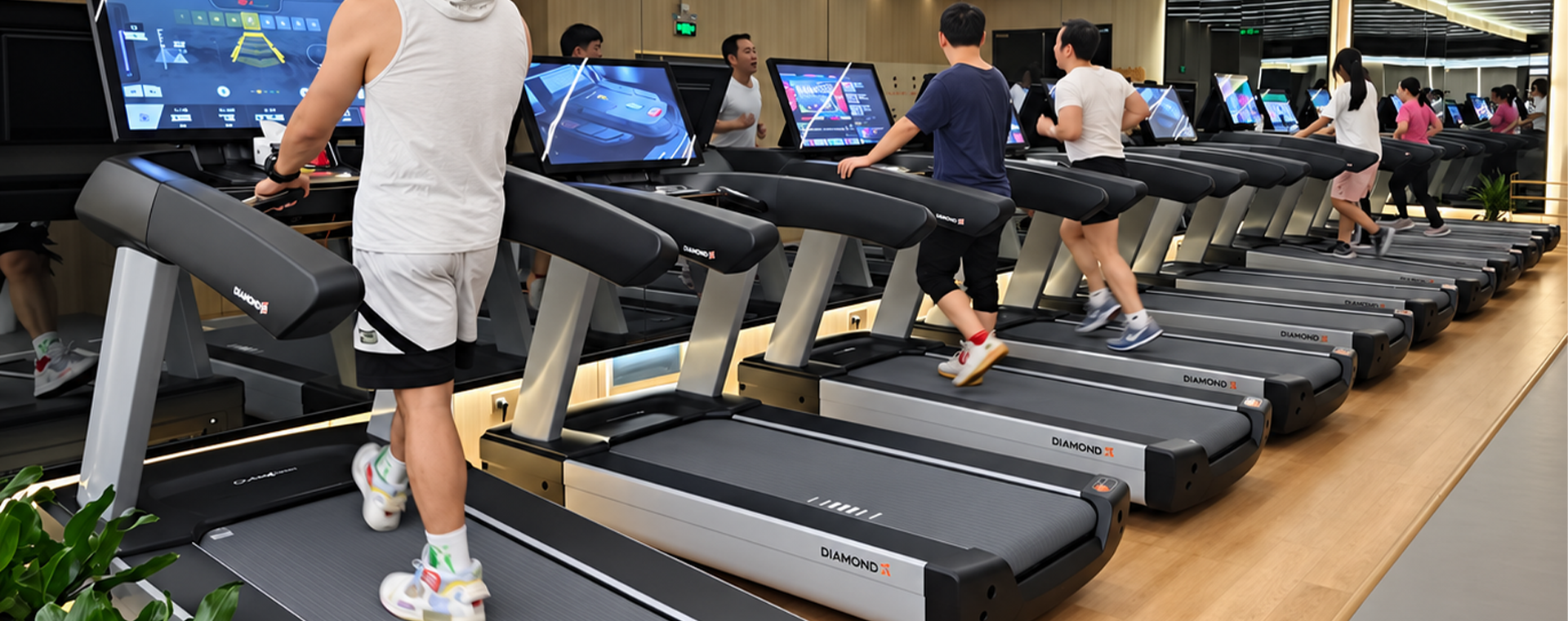
Define traffic and duty cycle
The right commercial treadmill starts with an honest estimate of daily traffic. A hotel gym with short morning and evening peaks has a different duty cycle from a membership club that may run machines continuously for many hours. Record expected users, peak periods, average session length and whether the treadmill will serve general fitness, performance training or rehabilitation. This operating profile determines how much frame stability, motor capacity, cooling and service access the facility really needs. It also helps buyers decide how many units to install so that queues do not concentrate wear on only one or two machines.
Compare the running platform and performance
Running area, belt feel, speed range and incline should match the target users. A generous deck improves confidence for taller users and faster running, while effective cushioning can make repeated sessions more comfortable. Buyers should also check step-up height, side-rail width, emergency stop placement and stability at both walking and running speeds. Specifications matter, but a trial using the facility’s real training scenarios is more revealing than comparing numbers alone. Ask the supplier to explain how the drive system, rollers and deck are designed for commercial use.
Make the console easy for every member
A commercial console must be clear before it is clever. Members should be able to start, change speed or incline and stop without asking staff for help. Large keys, readable workout data and logical program navigation reduce friction for beginners and older adults. If a connected screen or entertainment option is required, confirm network requirements, software support and what happens when the connection is unavailable. The best interface supports both a quick-start user and a member who wants structured interval or heart-rate training.
Plan maintenance before installation
Service planning belongs in the purchasing decision. Confirm routine cleaning points, belt and deck inspection intervals, access to wear parts, diagnostic functions and local or remote technical support. Ask for a preventive-maintenance schedule and a realistic spare-parts list before delivery. Facilities with multiple locations should standardize procedures and keep maintenance records for every unit. Easy access to service areas can reduce downtime, while staff training helps small issues get reported before they become expensive failures.
Buy for lifecycle value, not only purchase price
The lowest quotation is not always the lowest cost. Compare warranty coverage, expected parts availability, energy use, maintenance time, downtime risk and resale or replacement planning. A balanced treadmill fleet may combine premium units for high-demand zones with simpler models for walking or lower-traffic areas. Give shortlisted suppliers the same operating brief and request a model recommendation, specification sheet, service plan and total quotation. That process makes proposals easier to compare and turns the purchase into a long-term operating decision rather than a one-time price negotiation.
Key takeaways
- Match treadmill specifications to real daily traffic
- Test safety, comfort and console usability
- Confirm maintenance and spare-parts support before ordering